
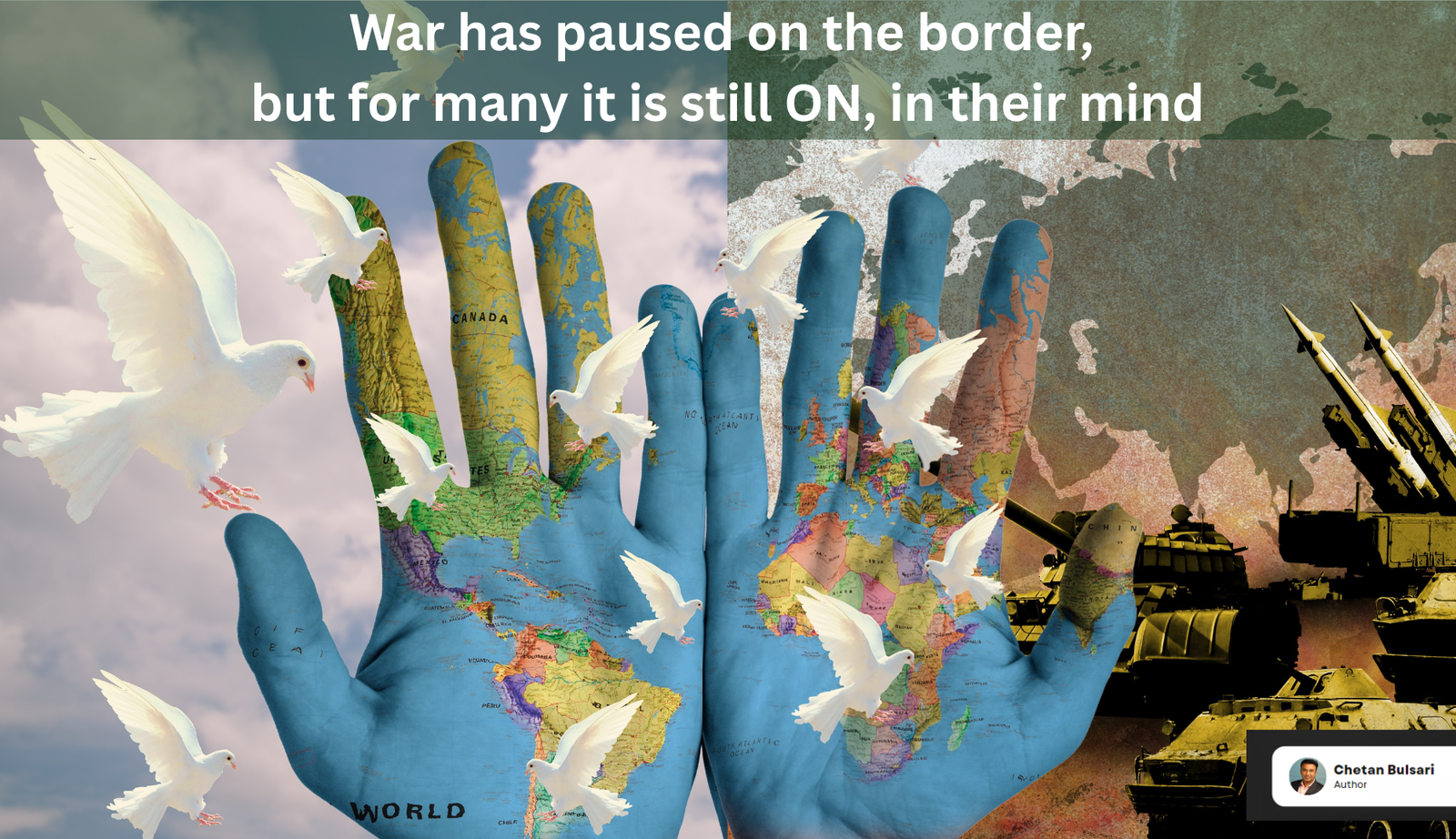
Geo-political tension over last few weeks has seen a surge in nationalistic fervor, but beneath the surface, many individuals experience intense anxiety, fear, and uncertainty. These emotions are normal human responses to unpredictable and threatening circumstances, yet they are often stigmatized as weakness or a lack of patriotism.
It is crucial to recognize these reactions as valid and foster environments at home and at work, where support and understanding prevail.
While we all celebrate the success of our armed forces and let us not forget those around us who are probably still struggling with anxiety and fear. For many the war outside is over, but the one inside is still on.
The big question is – How do I help family members and coworkers manage anxiety and fear during times of conflict and heightened tension?
As a life coach, here are my practical suggestions to support someone dealing with mental conflict.
- Recognize and Validate Emotions
Acknowledge that anxiety, fear, and even panic are natural responses to the threat and uncertainty of war. Suppressing or invalidating these feelings can increase distress and isolation.
Encourage open conversations. Let loved ones and colleagues know it is safe to express their concerns without judgment or ridicule.
- Limit Exposure to Distressing News
Continuous exposure to news about war can heighthe ten anxiety and create a sense of helplessness. Set boundaries around media consumption by designating specific times for news updates and avoiding sensationalist or unreliable sources.
Remind others that media often highlights the most dramatic events, which may not reflect the broader reality.
- Maintain Routines and Self-Care
Routines provide a sense of normalcy and control in chaotic times. Encourage maintaining regular habits, including sleep, meals, and personal hygiene.
Promote self-care activities such as exercise, hobbies, and relaxation techniques like yoga or meditation, which can help regulate emotions and reduce stress.
- Foster Social Support and Connection
Strong social ties are a buffer against anxiety. Stay connected with family, friends, and supportive communities, both in person and virtually.
At work, cultivate a culture of empathy. Listen without judgment, offer help, and check in regularly with colleagues who seem distressed.
- Support Children and Vulnerable Individuals
Children are especially sensitive to the emotional climate around them. Provide reassurance, maintain routines, and be honest in age-appropriate ways about what is happening.
Watch for behavioral changes such as withdrawal, tantrums, or sleep disturbances, and address them with patience and understanding.
- Encourage Healthy Coping Strategies
When someone is overwhelmed by anxiety or panic, speak calmly and clearly, focusing their attention on the present and guiding them through grounding exercises (e.g., naming objects in the room, deep breathing).
Suggest engaging in simple, purposeful activities-like cooking together or doing household chores-to provide distraction and a sense of accomplishment.
- Combat Stigma and Guilt
Remind everyone that feeling anxious or fearful does not mean they are weak or unpatriotic. These are universal human reactions to danger and uncertainty.
Address feelings of guilt by focusing on what can be controlled in the present, and by finding ways to help others, which can restore a sense of agency and purpose.
- Know When to Seek Professional Help
If anxiety becomes overwhelming or interferes with daily functioning, encourage seeking support from mental health professionals. There is no shame in asking for help.
War and conflict test the resilience of individuals and communities. By recognizing anxiety as a common and understandable response, fostering supportive relationships, and promoting healthy coping mechanisms for dealing with mental conflicts, we can help our loved ones and coworkers weather the psychological storm.
Empathy, connection, and practical support are the strongest antidotes to fear – no matter the circumstances
Above all, remember,
If someone is anxious, that does not make them less patriotic
If someone is afraid or worried about the consequences of war, it does not make one weak
#humancompass
#mentalconflict